
Is Santaquin, Utah a good place to live?
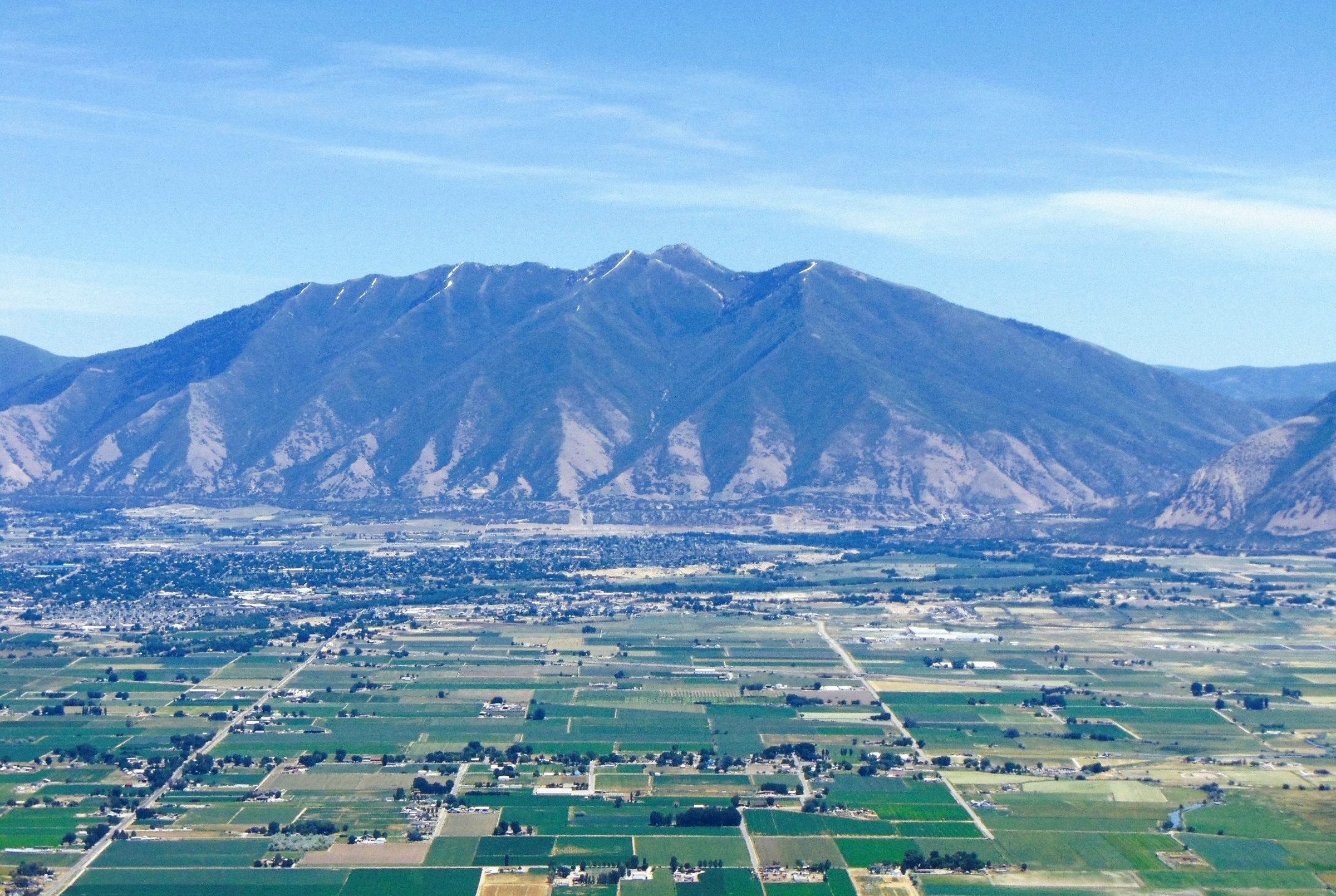
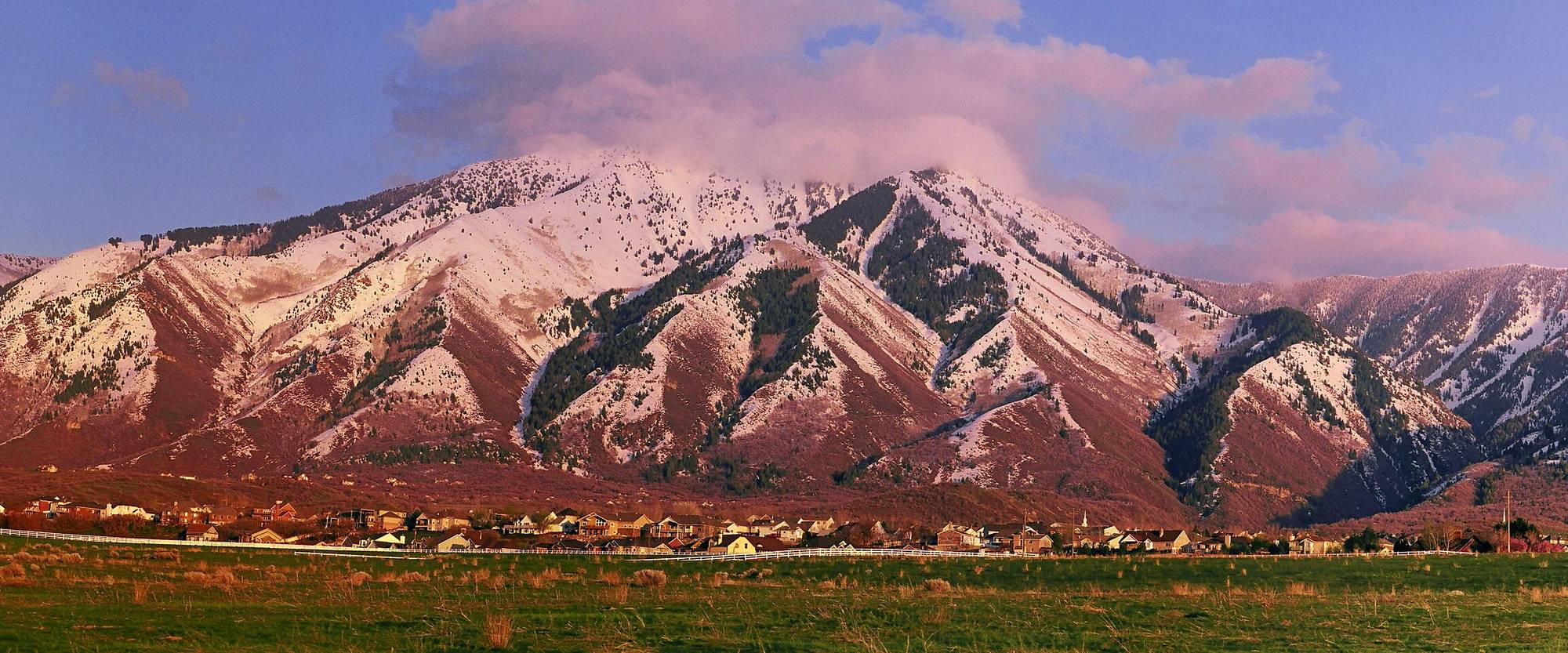
For families who want a newer home, a real yard, and a lower price than towns closer to Provo, yes. Santaquin is the last town on I-15 before the freeway leaves Utah County, with orchards on its edges, the mountains right behind it, and new neighborhoods filling in fast.
- Safer than the county as a whole: the Santaquin Police Department reported 18.61 offenses per 1,000 residents in 2024, about 40% below the Utah County rate of 30.81 and well below neighboring Payson (30.46).
- Growing fast: Santaquin grew from 13,719 people in 2020 to an estimated 18,989 in 2025, about 38%, more than twice the county's 15%.
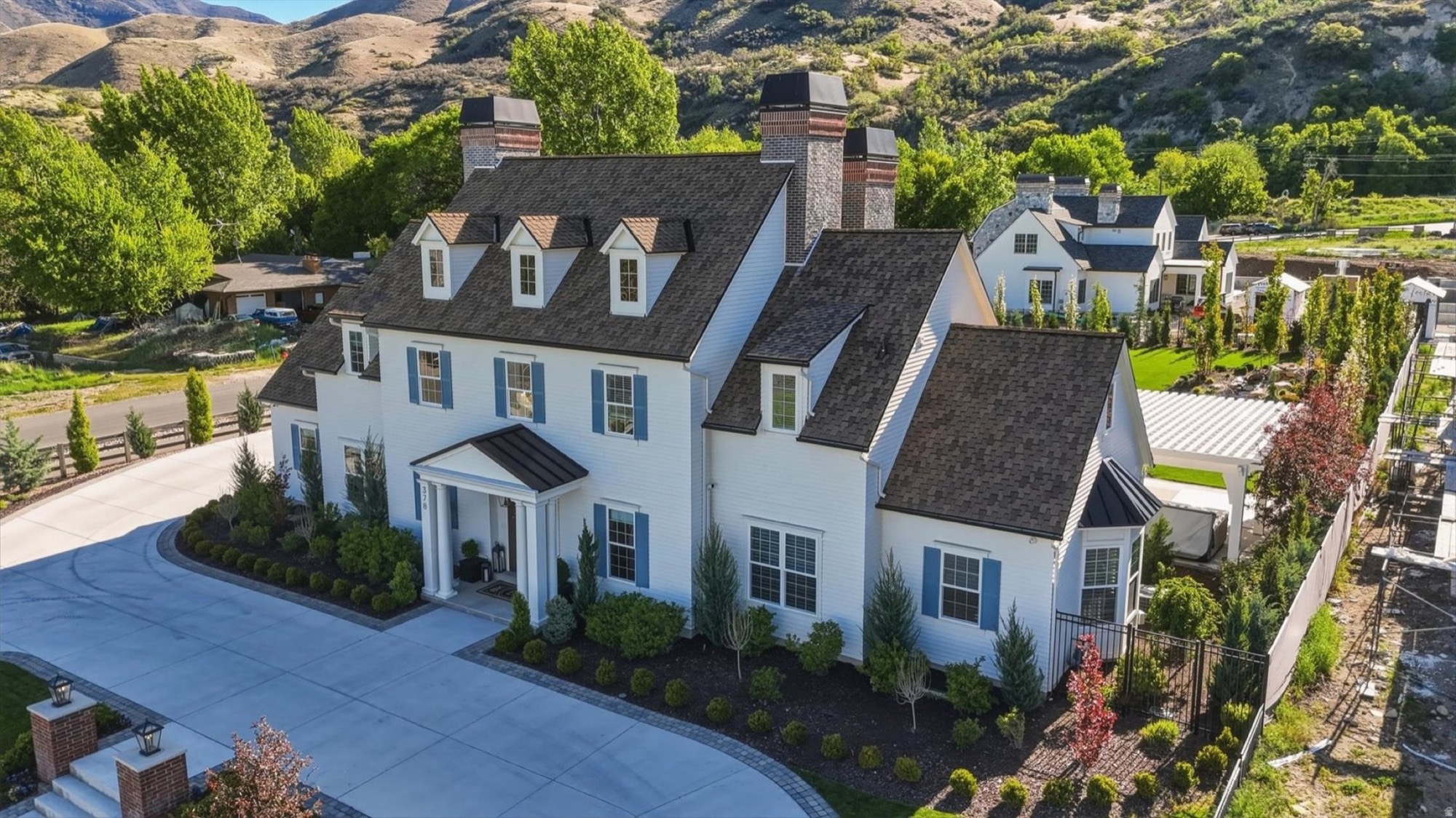
- Newer homes: about one in three homes sold here in the last year was brand new (see home prices below).
- Its own police and fire: the city runs its own police department and its own fire and EMS department, both based at the Public Safety Building on Main Street.
The tradeoffs: Santaquin is a commuter town. It is about 27 minutes to downtown Provo, 42 to Lehi, and about 68 miles to the Salt Lake City airport. There is no hospital in town (Mountain View Hospital in Payson is about 13 minutes away), and older students go to school in Payson.
What is the cost of living in Santaquin?
Lower than most of Utah County for housing, about average for everything else. The biggest difference is the house itself: over the last 12 months the median single-family home in Santaquin sold for $539,900.
Here is what the fixed monthly city utility charges add up to for a typical home, before you use any water:
| City charge | Monthly (from June 16, 2026) |
|---|---|
| Drinking water base rate | $31.11 |
| Secondary (pressurized irrigation) water base rate, 1-inch line | $21.05 |
| Sewer base rate | $46.70 |
| Storm drain | $2.96 |
| Garbage, one can | $17.64 |
| Total before usage | $119.46 |
On top of that you pay for the water you use, sewer at $1.04 per 1,000 gallons, and $10.65 a month if you want a recycling can. Power and natural gas are billed separately by private companies. Property tax on a $540,000 primary home runs about $2,971 a year (see taxes below).
Water, secondary water, and sewer rates are adjusted every July 1 for inflation. Rates from the Santaquin City fee schedule.
What is the property tax rate in Santaquin, Utah?
The 2026 property tax rate for Santaquin City (Utah County tax district 190) is 0.010004, down slightly from 0.010055 in 2025. The whole city is one tax district, so unlike some neighboring towns, there are no extra neighborhood levies to check for.
Utah taxes a primary home on only 55% of its market value, because of the state's 45% residential exemption.
| Example: $540,000 primary home | |
|---|---|
| Taxable value (55%) | $297,000 |
| 2026 Santaquin rate (district 190) | 0.010004 |
| Estimated yearly property tax | about $2,971 |
How does that compare with nearby towns?
| Town (2026 base rate) | Rate | Same $540,000 home |
|---|---|---|
| Elk Ridge | 0.009610 | about $2,854 |
| Salem (base district) | 0.009734 | about $2,891 |
| Payson | 0.009882 | about $2,935 |
| Santaquin | 0.010004 | about $2,971 |
| Woodland Hills | 0.011581 | about $3,440 |
About 71% of Santaquin's rate goes to the Nebo School District. The city's own share is 0.001399.
Is Santaquin in Utah County or Juab County? Almost entirely Utah County, so you pay Utah County taxes. A small strip on the south end reaches into Juab County: the Census counts 9 residents there, and in 2026 the two counties were working on a land swap so the Summit Ridge neighborhood sits fully in Utah County. Second homes and rentals are taxed on full value. Rates from the Utah County Treasurer.
Who provides power and water in Santaquin?
Rocky Mountain Power provides electricity; Santaquin City provides drinking water, secondary water, sewer, storm drain, and garbage. Unlike Salem or Springville, Santaquin does not run its own power company.
- Power: Rocky Mountain Power, (888) 221-7070.
- Internet: the city lists CentraCom and Intellipop, among others. Check coverage for a specific address.
- Drinking water: comes from four city wells and mountain springs, with 3.5 million gallons of storage. In winter, 90% or more comes from the springs.
- Sewer: treated at the city's own wastewater treatment plant.
Does Santaquin have secondary water?
Yes. Santaquin runs a metered pressurized irrigation system for lawns and gardens, separate from drinking water. It usually turns on around April 15 and shuts off around mid-October. Secondary water costs $21.05 a month for a standard 1-inch line plus 94 cents per 1,000 gallons for the first 25,000 gallons, much cheaper than watering with drinking water.
More water is coming. Central Utah Project water started flowing to Santaquin in August 2026, and the Strawberry High Line Improvement Project, a federal and local project to pipe the old Highline Canal, is expected to bring more secondary water to the south end of the county by about 2032, with roughly 18 miles of new trail on top of the buried pipe.
Rates from the Santaquin City fee schedule, effective June 16, 2026. Water project details from the Mayor's October 2026 newsletter.
How fast is Santaquin growing?
Very fast. Santaquin added about 5,270 people from 2020 to 2025, a 38% jump, and the city's housing plan estimates about 21,200 residents by 2030. In 2023 alone the city added 204 new homes.
- Summit Ridge: the large master-planned neighborhood on the city's southwest side. Its southern tip crosses into Juab County, which is why the two counties have been negotiating a land swap.
- Santaquin Peaks Industrial Park: started in fall 2022 to bring jobs to the south end of the county.
- I-15 widening and a rebuilt Main Street interchange: UDOT plans to widen I-15 to three lanes each way from south of Santaquin to Payson and rebuild the Santaquin Main Street interchange. The environmental study was finalized in March 2025, and construction is expected to start as early as summer 2027.
Even with all the new building, the city's General Plan keeps a strong farm identity, with a whole chapter called "Agriculture Matters" and another on keeping a small-town downtown.
How much do homes cost in Santaquin?
Santaquin home prices rose from a median of $325,000 in 2019 to $499,390 in 2022, held near $500,000 in 2023, and have edged up to $535,000 so far in 2026. Over the last 12 months (October 2025 through September 2026), the median single-family home sold for $539,900, or $181 per square foot, and only 0.9% of sales were $1 million or more.
Median sold price of single-family homes in Santaquin by year. *2026 is January through September. Based on UtahRealEstate.com sales data, pulled October 20, 2026.
What your budget buys in Santaquin
| Price | Typical home |
|---|---|
| $400K to $500K | About 2,350 square feet on about a sixth of an acre, usually 3 or 4 bedrooms, in a home typically built around 2021. |
| $500K to $600K | About 3,000 square feet on a little over a fifth of an acre, usually 4 bedrooms; about a third were brand new, built in 2025 or later. |
| $600K to $750K | About 3,850 square feet on about a quarter of an acre, usually 5 bedrooms; about half were brand new, built in 2025 or later. |
| $750K and up | About 4,350 square feet on about four-tenths of an acre, usually 5 bedrooms, in a home typically built around 2019, with recent sales up to $2.4 million (a home on about 65 acres). |
Santaquin is a busy new-construction market: 73 of the 217 single-family homes sold in the last 12 months were built in 2025 or later, at a median of $561,000 and a median of 52 days to sell. The 144 older resale homes sold for a median of $519,995, took a median of 45.5 days, and closed at about 100% of their list price. As of October 20, 2026, 110 single-family homes were for sale in Santaquin, with a median list price of about $564,950. Building lots of an acre or less sold for a median of $163,000 (about three-tenths of an acre) over the last two years, across 21 sales, and 4 large acreage parcels also sold.
What are the zoning, animal, and lot size rules in Santaquin?
Most Santaquin homes sit in residential zones with minimum lots from 8,000 square feet to one acre, and farm animals are allowed on any lot of one-third acre or more. The main zones, from Santaquin City Code Title 10:
| Zone | Minimum lot |
|---|---|
| R-8 | 8,000 square feet |
| R-10 | 10,000 square feet for new lots |
| R-12 | 12,000 square feet |
| R-15 | 15,000 square feet (about a third of an acre) |
| R-20 | 20,000 square feet |
| R-43 | One acre |
| Agriculture zones | 5 acres |
The city's official zoning map (February 2026) shows the zone for any property.
Can you have horses or chickens in Santaquin?
Horses, goats, and sheep need a lot of at least one-third acre (14,375 square feet), in any zone. Santaquin uses a points system: each acre gets 100 points for farm animals and another 100 for fowl, prorated from one-third acre. A pastured horse counts 100 points, a stabled horse 30, and a goat, sheep, or llama 10. Cows, pigs, and roosters are allowed only in the agriculture zones.
Chickens are allowed on any residential lot, based on lot size. Each hen counts 5 points, so a quarter-acre lot works out to about five hens.
Hillside lots on the east bench
Homes along the foothills fall in the city's Hillside Development Overlay Zone. Before building there, expect:
- A geologic hazard study for faults, rockfall, debris flows, and slope stability. Slopes over 30% and other sensitive areas cannot be built on unless every hazard is fixed.
- A wildfire hazard review, and landscaping around the home that meets firewise standards and is approved by the fire department before you move in.
- On lots with an average slope over 15%: at least 8,000 square feet of buildable, non-sensitive ground, plus a grading and drainage plan with the building permit, and a driveway no steeper than 12%.
Maps of the hillside fire, slope, and geologic hazard areas are on the city's hillside development page.
Can you build an ADU or basement apartment in Santaquin?
Yes. Santaquin allows one accessory dwelling unit per lot under city code section 10.16.080, last updated in February 2026.
- Basement apartments and other attached units are allowed in every residential zone on a lot with a single-family home. They need one extra off-street parking space, and a new home cannot add a separate front or street-side entrance just for the apartment.
- Detached cottages are allowed in the R-8, R-10, and R-15 zones and the Main Street residential area. They go in the back yard, can be up to 800 square feet of footprint and 1,600 square feet total, no taller than the main home or 24 feet, and at least 12 feet from the house and 10 feet from the side and rear lot lines. They need two extra parking spaces, not tandem.
- The owner has to live there, in either the main home or the detached unit, and a detached unit can never be sold separately.
- A home with an apartment can have its own separate water and secondary water meters.
What does it cost to build a new home in Santaquin?
City impact fees for a typical new home on a quarter-acre lot total about $18,250: sewer $5,096, parks $5,492, secondary water $4,123, drinking water $1,180, fire and EMS $784, storm drain $770, roads $769, and police $36. Meters, the building permit, and plan check are extra. A detached ADU pays its own sewer ($4,587) and park ($4,040) fees.
Fees from the full Santaquin City fee schedule, Resolution 06-04-2026.
What schools serve Santaquin?
Santaquin is in the Nebo School District. The three elementary schools in town are:
- Apple Valley Elementary
- Orchard Hills Elementary
- Santaquin Elementary
There is no junior high or high school in Santaquin itself. Older students go to schools in Payson, including Payson High School. The city also points families to C.S. Lewis Charter School.
School boundaries depend on the address, so confirm a specific home with Nebo School District at (801) 354-7400 before you buy.
How far is Santaquin from Provo and Salt Lake?
About 27 minutes to downtown Provo and 42 minutes to Lehi without traffic. Santaquin sits right on I-15 at the Main Street (U.S. 6) interchange, so most commutes start on the freeway.
| From Santaquin City Hall to | Drive time, no traffic |
|---|---|
| Mountain View Hospital, Payson | about 13 minutes |
| Intermountain Spanish Fork Hospital | about 19 minutes |
| Downtown Provo | about 27 minutes |
| BYU | about 32 minutes |
| Lehi | about 42 minutes |
| Salt Lake City airport | about 68 miles |
The nearest FrontRunner station is Provo Central, about 30 minutes north. The city says a UTA bus route extension runs from Payson to Santaquin, and UTA can help set up vanpools.
What is Santaquin known for?
Orchards, its pioneer story, and being the gateway between Utah County and Juab County. Santaquin was first called Summit City, because it sits on the summit dividing Utah and Juab valleys. Pioneers settled it in late 1851, led by Benjamin F. Johnson, and the town is named for Santaquin, the son of Chief Guffich, whose friendship with Johnson helped the settlers through the Walker War years.
Fruit is still part of the town's identity. Santaquin's summer celebration is Orchard Days, and the orchards on the edge of town are a big reason people move here. It is not always easy farming: in 2026 a spring cold snap cost local farmers the whole fruit crop.
- Santaquin Canyon and Tinney Flats, a favorite spot for picnics and campfires just up the canyon.
- Prospector View Park and Trailhead and a city bike skills park.
- The Chieftain Museum, the city's local history museum.
Common questions
Is Santaquin, Utah safe?
Yes. In the 2024 Crime in Utah report, the Santaquin Police Department recorded 18.61 offenses per 1,000 residents, about 40% below the Utah County rate of 30.81 and well below Payson (30.46).
What is the property tax rate in Santaquin, Utah?
The 2026 rate for Santaquin City (Utah County tax district 190) is 0.010004. A $540,000 primary home pays about $2,971 a year, because Utah taxes primary homes on 55% of their value.
What county is Santaquin, Utah in?
Utah County, almost entirely. A small strip on the south end reaches into Juab County, where the Census counts 9 residents, and the two counties have been working on a land swap so the Summit Ridge neighborhood sits fully in Utah County.
Who is the power company in Santaquin?
Rocky Mountain Power. Santaquin City provides drinking water, secondary water, sewer, storm drain, and garbage service.
Does Santaquin have secondary water?
Yes. Santaquin runs a metered pressurized irrigation system, usually on from about April 15 to mid-October. The base rate is $21.05 a month for a 1-inch line.
Can I build a basement apartment or ADU in Santaquin?
Yes. One accessory unit is allowed per lot. Basement apartments are allowed in every residential zone; detached cottages are allowed in the R-8, R-10, and R-15 zones. The owner must live on the property.
How far is Santaquin from Provo?
About 27 minutes to downtown Provo and 32 to BYU without traffic. Lehi is about 42 minutes away.
Is there a hospital in Santaquin?
No. The closest are Mountain View Hospital in Payson, about 13 minutes away, and Intermountain Spanish Fork Hospital, about 19 minutes away.

Santaquin has one of the lowest prices per square foot in Utah County, about $181 per square foot, and right now buyers have more choices here than in most nearby towns. Here is what most people miss: on October 20, 2026, 110 single-family homes were for sale in Santaquin, while about 18 sell in a typical month. That is roughly 6 months of homes for sale, compared with about 3 months in Payson next door. About two out of three sales here also included seller-paid concessions, typically $10,000. If you are buying, that is room to ask for help with closing costs or a lower rate. If you are selling, price against the homes that actually sold, not the ones still sitting.
Thinking about Santaquin?
Whether you are moving to Santaquin or moving up within it, tell us what you are looking for. Matt will reach out personally, usually the same day.
Thank you.
Matt has your details and will reach out personally. If it is easier, you can text him anytime at (385) 477-8138.
Sources
- U.S. Census Bureau, city population estimates 2020 to 2025 (Utah)
- Utah County Treasurer, 2026 tax rates for district 190 (Santaquin City)
- Utah County Treasurer, 2026 tax rates for district 170 (Payson City)
- Utah Code § 59-2-103, residential exemption
- Utah Bureau of Criminal Identification, 2024 Crime in Utah report
- Santaquin City, simplified fee schedule, rates effective June 16, 2026
- Santaquin City, full fee schedule, Resolution 06-04-2026
- Santaquin City, other utility providers
- Santaquin City, water
- Santaquin City, pressurized irrigation
- Santaquin City, Mayor's Newsletter, October 2026
- Santaquin City Code, Title 10, including sections 10.16.080 (accessory dwelling units), 10.20 (zones), 10.20.230 (hillside overlay), and 10.64 (animal rights)
- Santaquin City, official zoning map, February 2026
- Santaquin City, hillside development documents
- Santaquin City, Moderate Income Housing Plan, 2025 update
- Santaquin City, State of the City 2024
- Santaquin City, General Plan
- Daily Herald, pending land swap would place Santaquin development fully in Utah County, April 27, 2026
- UDOT, I-15 Santaquin project
- Santaquin City, local transportation
- Nebo School District, school directory
- Santaquin City, history
- Santaquin City, police department
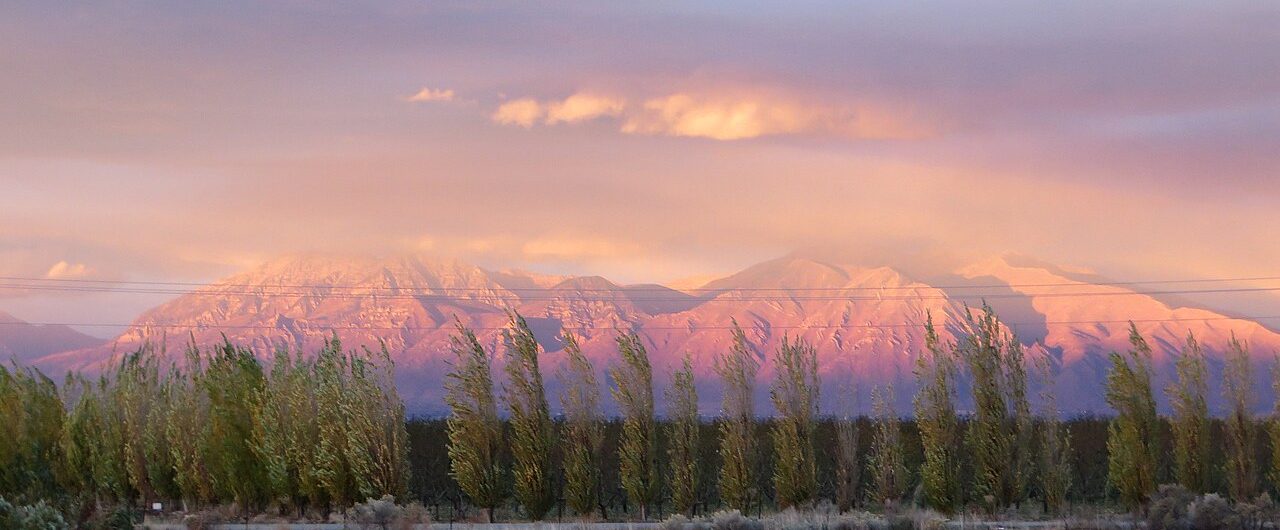
- Header photo: Misty Sunset over Wasatch Mountains, U.S. Route 6, Santaquin, Utah, by Ken Lund, Wikimedia Commons, CC BY-SA 2.0
- UtahRealEstate.com (Wasatch Front MLS), Santaquin single-family and lot sales, pulled October 20, 2026
Last updated October 2026. Drive times are estimates without traffic. Tax estimates assume a primary home; confirm each parcel with the county. Utility rates change; confirm with the city. Market figures are based on information from UtahRealEstate.com and are deemed reliable but not guaranteed.