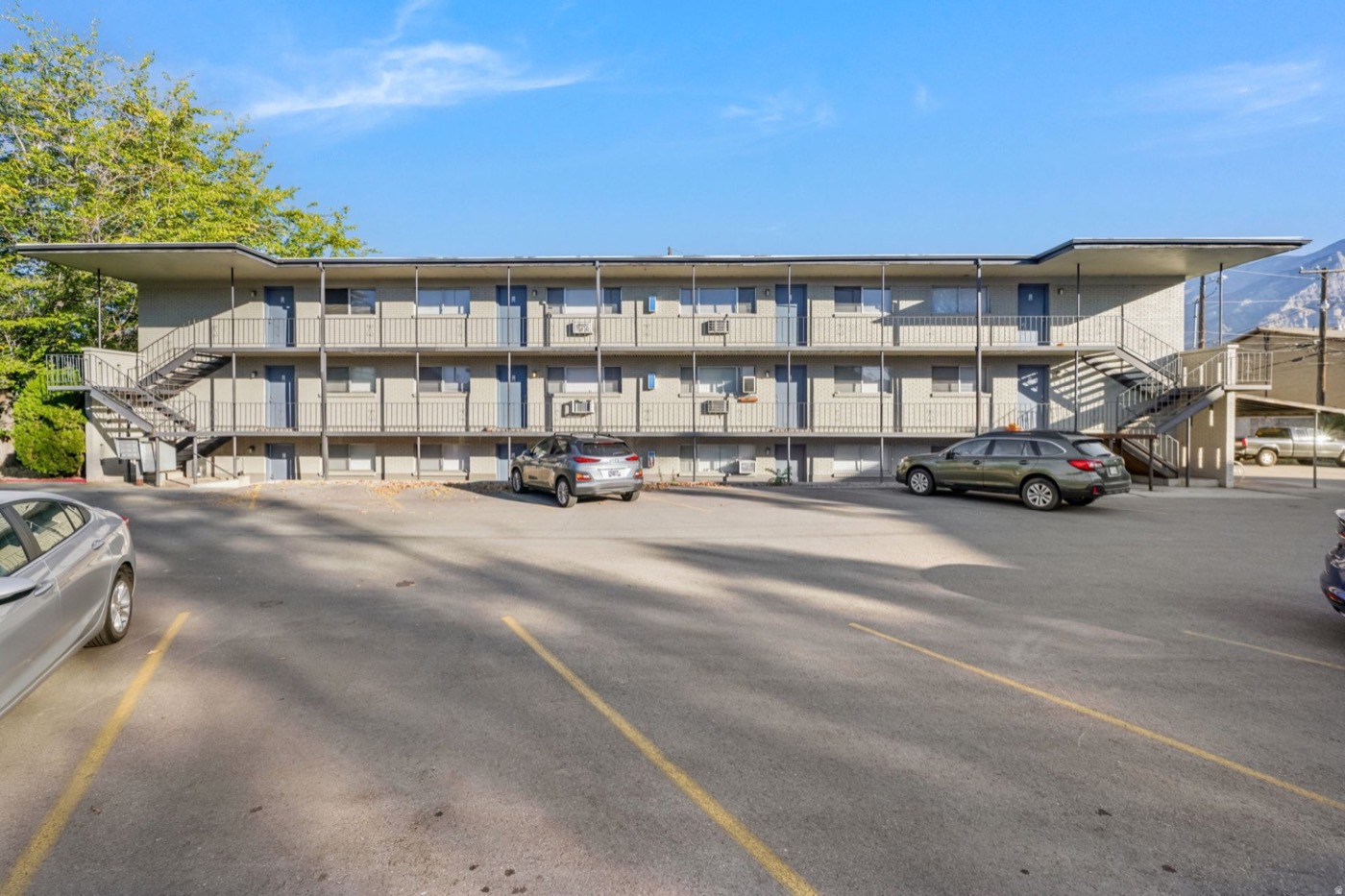
What is a 1031 exchange?
Section 1031 of the tax code lets you trade one investment property for another without paying tax on the gain at the time of the sale. The tax is deferred, not erased: your old property's tax basis carries over to the new one.
It only applies to real property held for investment or used in a business. Since 2018, it no longer applies to equipment, vehicles, or other personal property. It also does not apply to property you hold mainly to resell, like lots a developer builds and sells, or to your own home.
What property qualifies in Utah?
The IRS says real properties are generally like-kind to each other, whether they are improved or unimproved. That gives Utah County owners a lot of room:
- A rental home can be exchanged for a fourplex.
- Raw land or farm ground can be exchanged for an apartment building or a commercial property.
- A small commercial building can be exchanged for several rental homes.
A Utah-specific note: the IRS says certain shares in a mutual ditch, reservoir, or irrigation company can still qualify, when the company meets the tax-exempt requirements and state law treats the shares as real property. Ask your intermediary and CPA before counting water shares in an exchange.
Property in the United States and property outside it are not like-kind to each other.
What are the 1031 exchange deadlines?
Two clocks start the day your sale closes, and neither can be extended for weekends or holidays:
| Deadline | What has to happen |
|---|---|
| Day 45 | Identify your replacement property in writing. |
| Day 180 | Close on the replacement property. If your tax return is due before day 180, you must close by the return's due date, including extensions. Filing an extension can protect the full 180 days. |
How many properties can you identify?
- Three-property rule: up to three properties of any value.
- 200% rule: any number of properties, as long as their total value is no more than twice what you sold.
- 95% rule: if you go past both limits, you must actually buy at least 95% of the value of everything you identified.
In Utah County, where good multifamily is scarce, the 45-day window is where most exchanges succeed or fail. We start looking before your sale closes.
How does a 1031 exchange work, step by step?
- Plan before you list. Talk with your CPA and a qualified intermediary, and start looking at replacement properties.
- Hire a qualified intermediary. The money from your sale must go to the intermediary, not to you. If you touch the money, even through your own agent, the sale is taxed. Your own attorney, accountant, or real estate agent from the last two years cannot serve as your intermediary.
- Sell your property. The 45 and 180 day clocks start at closing.
- Identify replacement property by day 45, in writing, following one of the rules above.
- Close by day 180. The intermediary sends the money directly to the purchase.
- Report it on Form 8824 with your federal return.
How do you avoid paying tax in a 1031 exchange?
Anything you receive that is not like-kind real property is called boot, and it is taxed. There are two common kinds:
- Cash boot: money from the sale you keep instead of reinvesting.
- Mortgage boot: paying off a loan on the old property and taking on a smaller loan, or none, on the new one. The IRS counts net debt relief as boot.
To defer all the tax, the usual rule of thumb is: buy property of equal or greater value, reinvest all of your cash, and replace your old debt with new debt or with added cash.
Depreciation recapture is deferred too, except to the extent you receive boot.
A Utah County example, with numbers
Here is a simplified illustration. Your CPA will run the real numbers for your situation.
| Fourplex bought in 2015 | $700,000 |
| Depreciation taken over the years | $180,000 |
| Adjusted tax basis | $520,000 |
| Sold in 2026 | $1,200,000 |
| Gain, before selling costs | $680,000 |
If the owner simply sold, Utah's 4.45% income tax alone would be about $30,000 on that gain, before federal capital gains tax and depreciation recapture, which are much larger.
With a 1031 exchange into a $1,600,000 building, reinvesting all the equity and carrying equal or greater debt, that tax is deferred. The full equity keeps working, and the goal is more income than the fourplex produced, not less.
Illustration only, with made-up numbers. Not tax or legal advice. Federal rates depend on your income and how the gain is split between capital gain and depreciation recapture.
Common 1031 exchange mistakes
- Taking the money. If sale proceeds reach your account, the exchange fails.
- Starting the search after closing. 45 days goes fast in a tight market.
- Trading down. Buying something cheaper, or taking on less debt, creates taxable boot.
- Selling to or buying from family. With related parties, both sides generally have to hold their property for two years, or the deferral is lost.
- Exchanging a vacation home without meeting the rules. The IRS safe harbor requires owning it 24 months, renting it at fair rent at least 14 days in each of the two prior years, and limiting personal use.
- Exchanging property you are developing to sell. Lots or homes held mainly for sale do not qualify.
Common questions
Does Utah tax a 1031 exchange?
Utah starts its income tax from your federal adjusted gross income, so gain you defer federally under Section 1031 is also deferred on your Utah return. Utah's individual income tax rate is 4.45% for 2026.
Can I 1031 exchange land for a rental property?
Yes. The IRS treats real properties as like-kind whether they are improved or unimproved, so land can be exchanged for a rental, an apartment building, or commercial property, as long as both are held for investment or business use.
Can I do a 1031 exchange on my house?
Not on a home used only as your personal residence. A home you live in may qualify for the separate Section 121 exclusion instead, if it was your main home for two of the last five years.
Can my real estate agent be my qualified intermediary?
No. Anyone who was your real estate agent, attorney, accountant, or employee within the two years before the exchange is disqualified.
What happens to the deferred tax if I hold the property until I die?
Under current federal law, heirs generally receive a new tax basis equal to the property's fair market value at the date of death, which can eliminate the deferred gain. Talk with your estate planner about your situation.
Can I exchange Utah water shares?
Possibly. The IRS says certain mutual ditch, reservoir, and irrigation company shares remain eligible when specific conditions are met, including state law treating the shares as real property. Confirm with your intermediary and CPA.

Most owners I meet think they have two choices: keep the building or cash out and pay the tax. The third option is the one I like most, which is trade up. A 1031 exchange lets the full value of what you have built keep working, and I will only recommend a trade if the new property is projected to produce the same income or more. Start the conversation before you list, because the 45 days is the hard part.
Planning a 1031 exchange?
Tell us what you own and what you want it to do. Matt will reach out personally, usually the same day. No pressure and no obligation.
Thank you.
Matt has your details and will reach out personally. If it is easier, you can text him anytime at (385) 477-8138.
Sources
- 26 U.S. Code § 1031, Exchange of real property held for productive use or investment
- Treasury Regulation § 1.1031(k)-1, deferred exchanges and identification rules
- IRS, Like-kind exchanges: real estate tax tips
- IRS, Instructions for Form 8824
- IRS Revenue Procedure 2008-16, dwelling units safe harbor
- 26 U.S. Code § 1014, basis of property acquired from a decedent
- Utah State Tax Commission, TC-40 instructions (2025)
- Utah Code § 59-10-104, individual income tax rate
Last updated October 2026. This guide is general education, not tax or legal advice. Sumsion Real Estate is a real estate brokerage, not a CPA firm or qualified intermediary. Always confirm your exchange with your CPA and intermediary.